Published on PeptideLab | Read time: 10 min | Last updated: October 2026
Why Mitochondria Matter
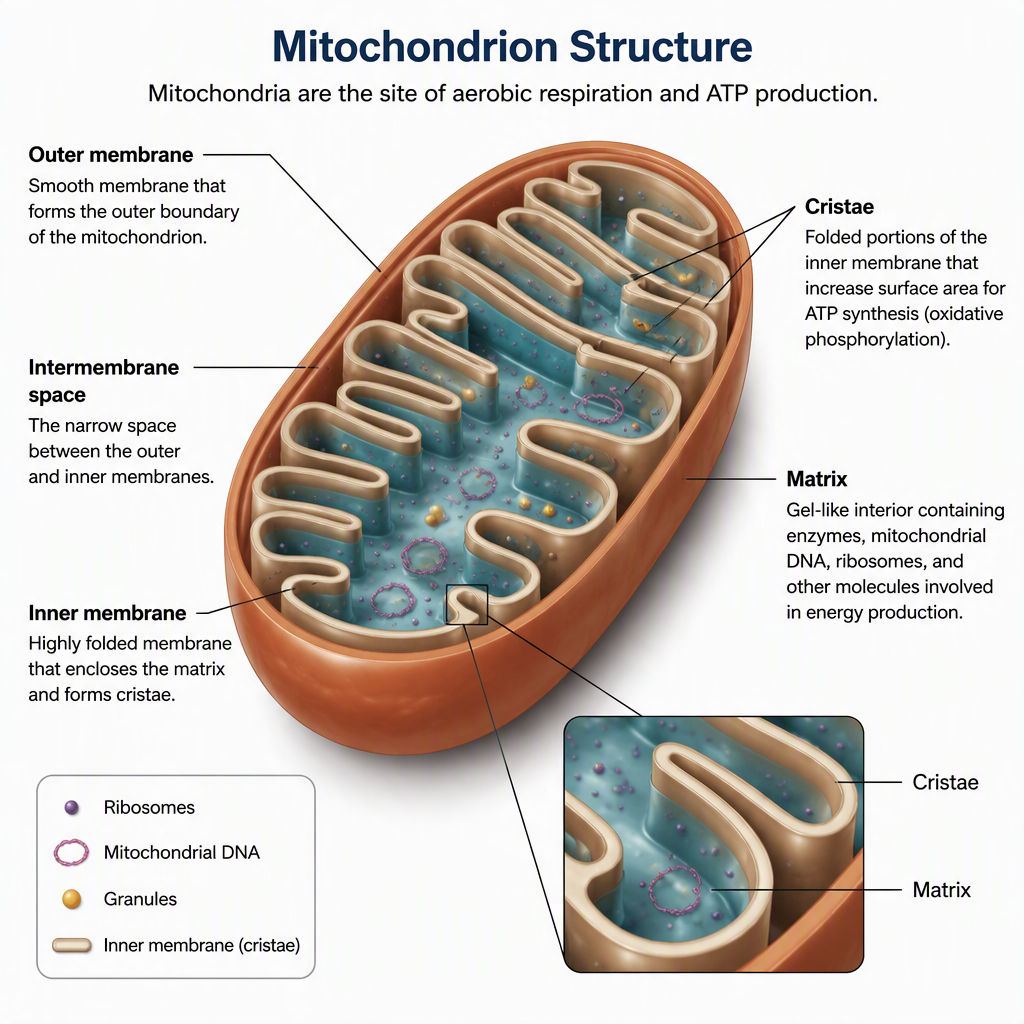
Mitochondria are often called the “powerhouses” of cells, but that understates their importance. They’re central to:
– Energy production (ATP)
– Metabolic regulation
– Cellular signaling
– Apoptosis (programmed cell death)
– Calcium homeostasis
– Reactive oxygen species (ROS) management
Browse our full peptide catalog
When mitochondria dysfunction, everything suffers.
The Mitochondrial Peptide Family
Several peptides specifically target mitochondrial function:
| Peptide | Primary Mechanism | Best For |
|---|---|---|
| MOTS-c | AMPK activation, metabolic reprogramming | Weight loss, insulin sensitivity |
| SS31 (Elamipretide) | Cardiolipin stabilization, ROS reduction | Mitochondrial protection |
| SS-31 analogs | Membrane potential preservation | Exercise recovery |
| Humanin | Mitochondrial stress response | Neuroprotection |
| ELR | Mitochondrial fusion promotion | Cellular health |
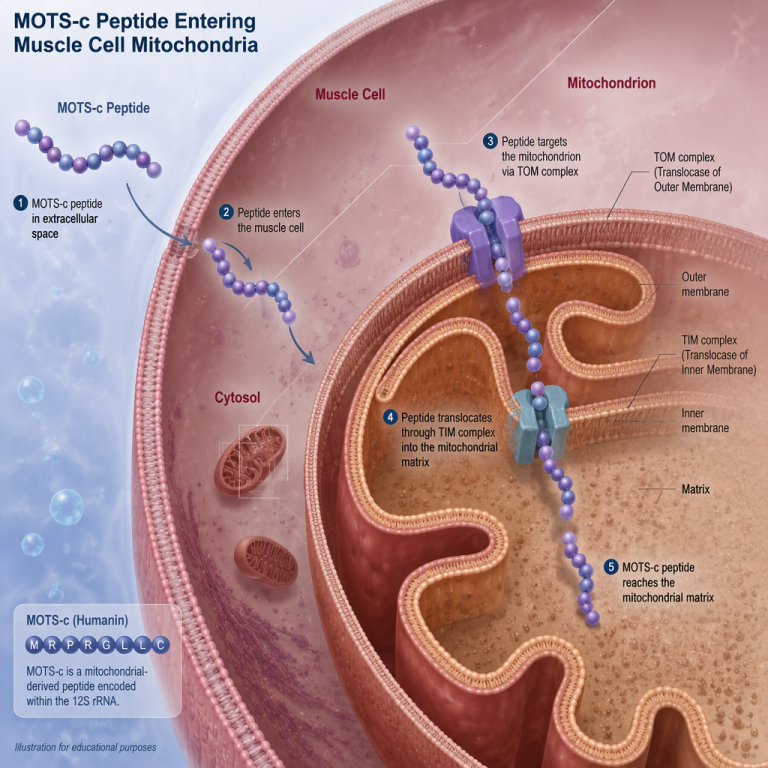
MOTS-c: The Metabolic Mimic
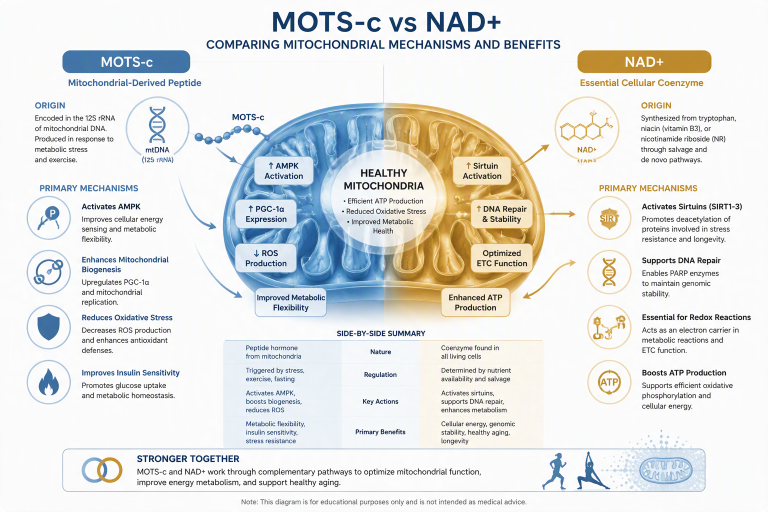
MOTS-c activates AMPK—the same pathway activated by exercise and caloric restriction.
Benefits
- Enhanced fat oxidation
- Improved insulin sensitivity
- Increased mitochondrial biogenesis
- Reduced inflammation
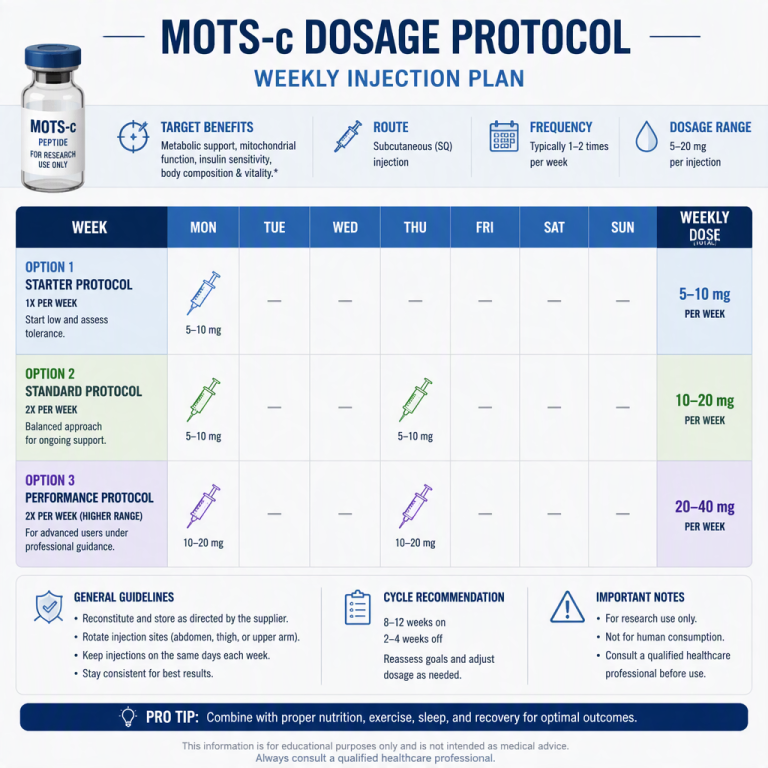
Dosing
Typically 2-5 mg subcutaneously, 2-3 times per week.
SS31: The Mitochondrial Shield
SS31 targets cardiolipin, a phospholipid critical for mitochondrial membrane integrity.
Benefits
- Reduces mitochondrial ROS production
- Improves ATP synthesis efficiency
- Protects against ischemia-reperfusion injury
- Supports cardiac and neuronal health
Dosing
5-10 mg subcutaneously daily or every other day.
Humanin: The Stress Responder
Humanin is produced in response to mitochondrial stress and helps cells survive adverse conditions.
Benefits
- Neuroprotection
- Anti-apoptotic effects
- Insulin sensitization
- Cardiovascular protection
Stacking Mitochondrial Peptides
| Stack | Rationale |
|---|---|
| MOTS-c + SS31 | AMPK activation + membrane protection |
| MOTS-c + NAD+ | Signaling + substrate support |
| SS31 + Humanin | Protection + stress response |
| All three | Comprehensive mitochondrial support |
Monitoring Progress
Track these metrics:
– Resting heart rate (decrease = improved efficiency)
– Exercise recovery time
– Morning body temperature
– Cognitive function
– Blood work (lipid panel, glucose, inflammatory markers)
The Bottom Line
Mitochondrial peptides represent a targeted approach to cellular energy optimization. While individual effects vary, the mechanistic rationale is strong—and the safety profiles are generally favorable.
Choose based on your primary goal: MOTS-c for metabolism, SS31 for protection, Humanin for stress resilience.
Disclaimer: Consult a healthcare provider before use. This article is for informational purposes only.