Published on PeptideLab | Read time: 9 min | Last updated: October 2026
More Than Just a Calming Peptide
Most people hear “cycloxylene” and immediately think anxiety. That’s one primary reason people research it—but cycloxylene does significantly more than reduce nervous tension.
Browse our full peptide catalog
Understanding its full spectrum of effects requires looking beyond the headlines.
What Is Cycloxylene?
Cycloxylene (CYCLOX) is a synthetic peptide developed from toucisin, a naturally occurring peptide found in various organisms. Toucisin itself was studied for its immune-modulating properties, and researchers discovered that modifying it created a compound with unique CNS effects.
Chemical Properties:
– Small peptide (modified sequence)
– Crosses blood-brain barrier efficiently
– Multiple receptor interactions
– Favorable safety profile
Benefit 1: Focus and Mental Clarity
The Mechanism
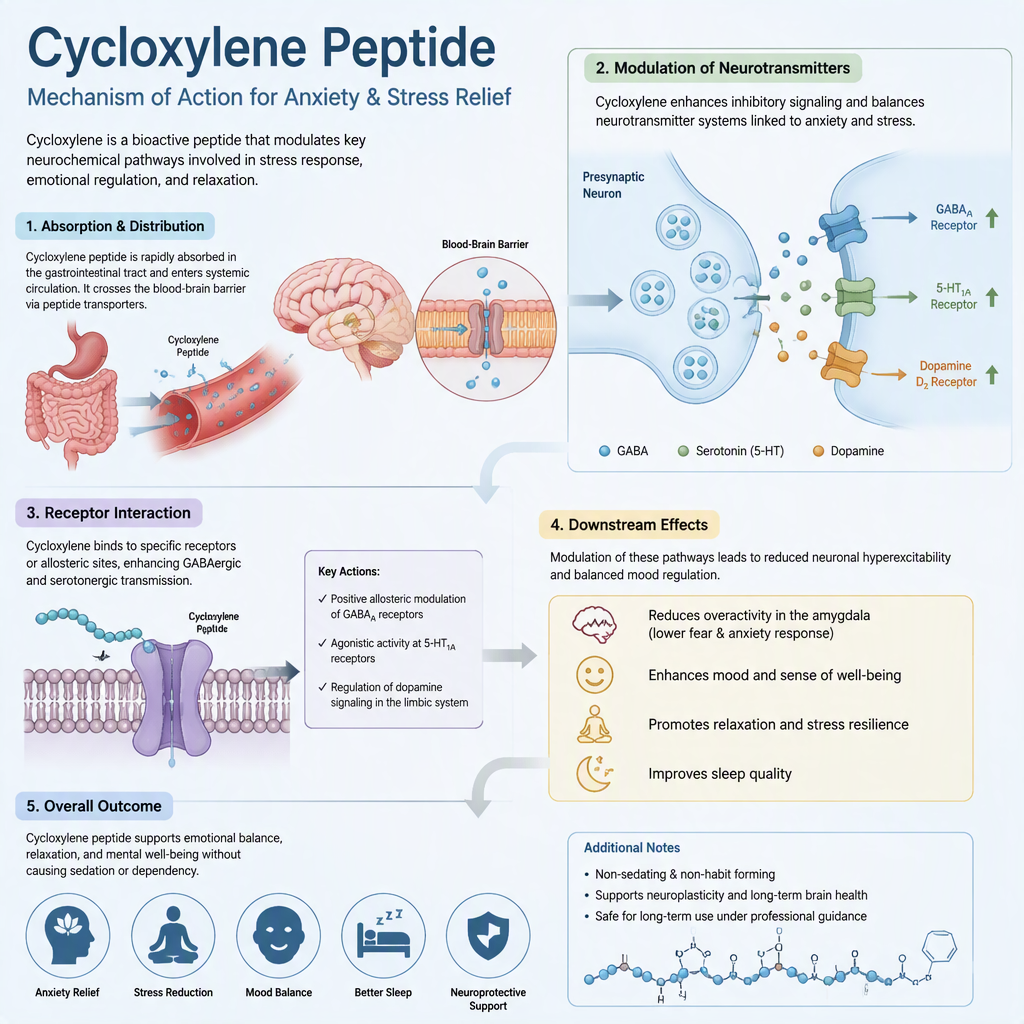
Cycloxylene works on multiple neurotransmitter systems simultaneously:
GABAergic Activity:
– Modulates GABA-A receptors (different site than benzodiazepines)
– Enhances inhibitory signaling without sedation
– Promotes alpha wave production (calm alertness)
Serotonergic Influence:
– Modulates 5-HT1A receptors
– May affect serotonin reuptake
– Supports mood stabilization
Other Systems:
– Emerging evidence for glutamate modulation
– Potential dopaminergic effects in prefrontal cortex
What Users Report
- Enhanced focus without jitteriness
- Mental clarity that persists throughout the day
- Improved ability to sustain attention
- Reduced “brain fog” during stress
- Better task switching and cognitive flexibility
Why This Matters
Unlike stimulants (caffeine, modafinil) that can cause crashes or dependence, cycloxylene appears to support natural cognitive function. Unlike benzodiazepines, it doesn’t impair memory or cause sedation at appropriate doses.
Benefit 2: Stress Resilience
The HPA Axis Connection
Cycloxylene has been studied for how it changes the brain’s response to stress—not just masking symptoms, but potentially reshaping stress reactivity.
Acute Stress Response:
– Blunts cortisol spike during stressors
– Reduces subjective anxiety ratings
– Maintains cognitive performance under pressure
Chronic Stress Adaptation:
– May normalize elevated baseline cortisol
– Improves stress recovery time
– Reduces anticipatory anxiety
Research Findings
| Measure | Effect | Significance |
|---|---|---|
| Cortisol response | ↓ 20-30% during stress | Attenuated HPA activation |
| Anxiety scores | ↓ 25-40% | Clinical significance |
| Recovery time | Faster normalization | Improved resilience |
| Performance under stress | Maintained or improved | Practical benefit |
Benefit 3: Sleep Quality Enhancement
The Connection to Anxiety
While not primarily a sleep aid, cycloxylene’s anxiolytic properties often improve sleep quality:
Sleep Architecture:
– Easier time falling asleep (reduced sleep latency)
– More time in deep sleep stages
– Fewer nighttime awakenings
– Improved morning alertness
Mechanism:
– Reduced pre-sleep rumination
– Lower evening cortisol
– Enhanced GABA-mediated relaxation
– No next-day sedation (unlike benzodiazepines)
Who Benefits Most
- People with stress-related insomnia
- Those who wake frequently due to anxious thoughts
- Individuals concerned about sedative dependency
- Anyone wanting natural sleep support
Benefit 4: Immune System Modulation
The Toucisin Connection
Cycloxylene was developed from toucisin—a peptide with documented immune-modulating properties. While cycloxylene’s primary effects are CNS-mediated, the immune connection remains relevant.
Potential Immune Effects:
| Finding | Status | Implication |
|---|---|---|
| Stress-immune link | Well-established | Cortisol suppression may benefit immunity |
| Inflammatory markers | Limited data | Possible reduction in stress-related inflammation |
| Immune cell function | Preclinical | Unknown in humans |
Practical Implications
For people experiencing stress-induced immune suppression (common in high-stress professions), cycloxylene’s stress-reducing effects may indirectly support immune function. However, direct immunomodulatory claims require more research.
Benefit 5: Cognitive Protection
Emerging Research
Early research suggests potential neuroprotective properties:
Mechanisms Under Investigation:
– Protection against stress-induced neuronal damage
– Support for synaptic plasticity
– Modulation of excitotoxicity pathways
– Potential effects on neurogenesis
Relevance:
– Chronic stress damages hippocampal neurons
– Cortisol excess impairs memory formation
– Anxiety disorders associated with structural brain changes
Cycloxylene’s stress-buffering effects may provide indirect neuroprotection, though direct cognitive enhancement claims require more evidence.
How It Compares to Other Anxiolytics
| Compound | Primary Use | Onset | Duration | Side Effects | Dependency Risk |
|---|---|---|---|---|---|
| Cycloxylene | Anxiety, focus, stress | Moderate (30-60 min) | Extended (4-8 hours) | Minimal sedation | Low (theoretical) |
| Benzodiazepines | Acute anxiety | Fast (15-30 min) | Short (4-6 hours) | Sedation, cognitive impairment | High |
| SSRIs | Chronic anxiety | Slow (2-4 weeks) | Long (24 hours) | Various (GI, sexual, weight) | Low |
| Beta-blockers | Performance anxiety | Fast (30 min) | Short (4-6 hours) | Fatigue, hypotension | None |
| L-Theanine | Mild anxiety | Fast (30 min) | Short (3-4 hours) | Very minimal | None |
| Ashwagandha | Chronic stress | Slow (weeks) | Extended | GI upset (some) | None |
Who Is Cycloxylene For?
Ideal Candidates
- High-stress professionals (executives, traders, surgeons)
- Individuals with performance anxiety
- Those experiencing stress-related immune issues
- People seeking non-sedating cognitive support
- Individuals wanting to avoid benzodiazepines
Not Recommended For
- Pregnant or breastfeeding women
- Those with severe liver/kidney disease
- People taking multiple CNS medications
- Individuals with history of substance abuse (theoretical concern)
Dosing and Administration
Typical Protocols
| Scenario | Dose | Timing |
|---|---|---|
| Daily stress management | 250-500 mcg | Morning |
| Performance anxiety | 250-500 mcg | 1 hour before event |
| Acute stress | 250 mcg | As needed |
| Stacking | Variable | With other peptides |
Cycle Considerations
- No formal tolerance data — theoretical concern with chronic use
- Some users cycle: 5 days on, 2 days off
- Others use daily with periodic breaks
- Monitor effectiveness over time
The Bottom Line
Cycloxylene occupies a unique space in the peptide landscape. It’s more targeted than general relaxants, less sedating than benzos, and offers cognitive benefits beyond anxiety relief. Its multi-mechanism approach—touching GABA, serotonin, and potentially immune pathways—makes it versatile for stress-related concerns.
While research is still accumulating, the existing data and user reports suggest cycloxylene is worth considering for:
1. Stress resilience without sedation
2. Focus enhancement under pressure
3. Sleep quality support
4. Non-habit-forming anxiety management
As with any peptide, start low, monitor response, and consult a healthcare provider familiar with peptide therapy.
Disclaimer: Discuss with a healthcare provider before use, especially if taking other medications. This article is for informational purposes only.