Published on PeptideLab | Read time: 9 min | Last updated: October 2026
The Mitochondrial Optimization Question
Both MOTS-c and NAD+ precursors target mitochondrial function—but through completely different mechanisms. Understanding the difference helps you choose the right approach.
Browse our full peptide catalog
What Is MOTS-c?
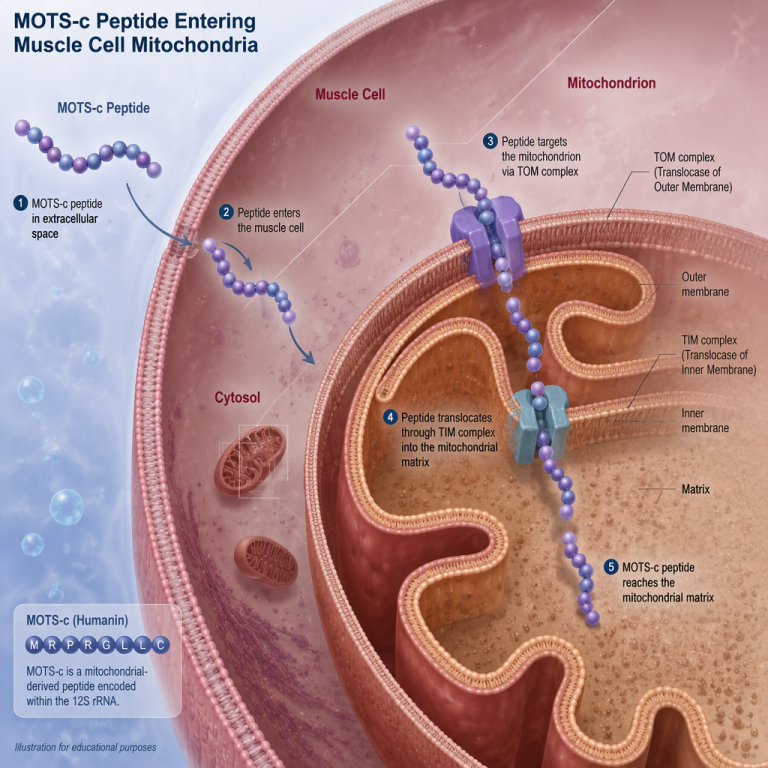
MOTS-c is a mitochondrial-derived peptide—a tiny protein fragment encoded within mitochondrial DNA itself. It’s one of the newest discoveries in the longevity field.
How It Works
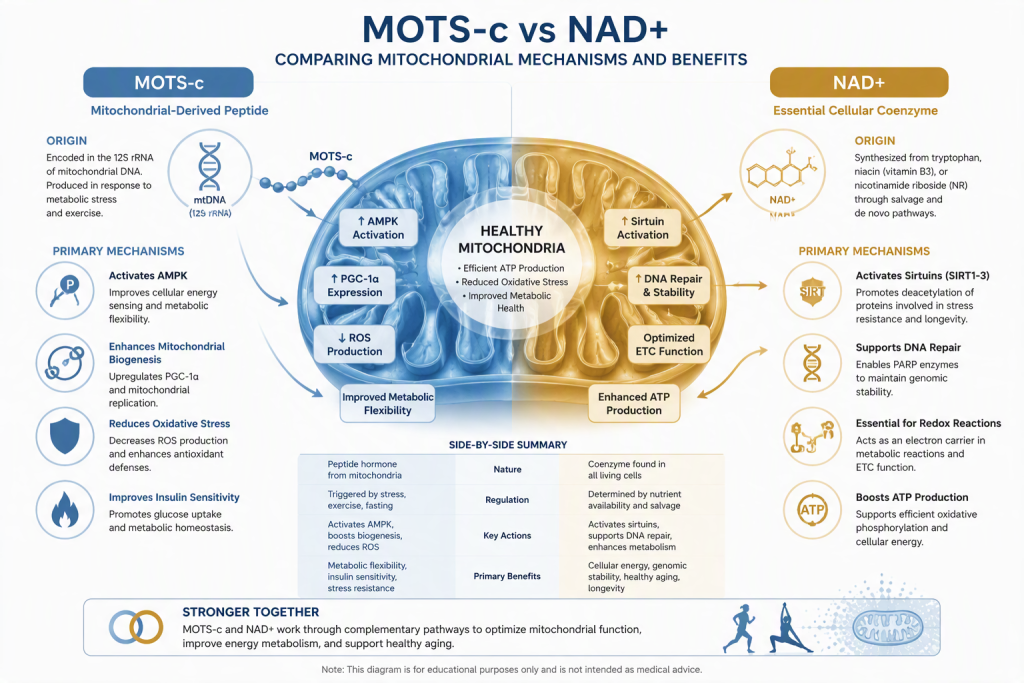
MOTS-c activates AMPK (AMP-activated protein kinase), a key cellular energy sensor:
– When AMP rises (low energy), AMPK switches on catabolic pathways
– AMPK promotes glucose uptake into muscles
– AMPK enhances fatty acid oxidation
– AMPK stimulates mitochondrial biogenesis
This is similar to the effects of exercise—MOTS-c essentially mimics the metabolic benefits of physical activity at the cellular level.
Clinical Applications
| Condition | MOTS-c Effect | Evidence Level |
|---|---|---|
| Obesity | Enhanced fat oxidation | Animal models |
| Type 2 diabetes | Improved insulin sensitivity | Preclinical |
| Aging | Metabolic reprogramming | Limited human data |
| Exercise performance | Enhanced endurance | Emerging research |
What Is NAD+?
NAD+ (Nicotinamide adenine dinucleotide) is a coenzyme found in every living cell. It’s essential for:
– Energy production in mitochondria
– DNA repair (via PARPs)
– Sirtuin activation (longevity genes)
– Cellular signaling
The Age Connection
NAD+ levels decline significantly with age:
– 20s: High levels
– 40s: ~50% of youthful levels
– 60s: ~25-30% of youthful levels
– 80s: Very low
This decline contributes to:
– Reduced mitochondrial function
– Impaired DNA repair
– Decreased sirtuin activity
– Accelerated aging
NAD+ Precursors
Since NAD+ itself has poor bioavailability, people supplement with precursors:
| Precursor | Mechanism | Bioavailability | Cost |
|---|---|---|---|
| NR (Nicotinamide riboside) | Converts to NAD+ | Good | Moderate-high |
| NMN (Nicotinamide mononucleotide) | Direct NAD+ precursor | Good | Moderate |
| Nicotinamide | NAD+ recycling | Excellent | Low |
| Niacin (B3) | Alternative pathway | Excellent | Very low |
The Key Difference
| Aspect | MOTS-c | NAD+ |
|---|---|---|
| Type | Peptide (signal molecule) | Coenzyme (metabolic fuel) |
| Primary target | AMPK activation | Sirtuins, PARPs, ETC |
| Administration | Injection | Oral supplement |
| Half-life | Short (minutes) | Continuous regeneration |
| Analogy | Light switch | Fuel |
MOTS-c is like flipping a switch—activating cellular programs for metabolic optimization.
NAD+ is like adding fuel—providing the raw material cells need for energy production and repair.
How They Work Together
These aren’t competing therapies—they’re complementary.
The Synergy
- NAD+ supports MOTS-c: Sirtuins activated by NAD+ support the mitochondrial health that MOTS-c optimizes
- MOTS-c amplifies NAD+ benefits: AMPK activation by MOTS-c promotes mitochondrial biogenesis, which increases NAD+ consumption
- Both improve energy metabolism: Different pathways, same outcome
Stacking Protocol
| Time | Supplement | Purpose |
|---|---|---|
| Morning | NAD+ precursor (NR/NMN) | Support baseline NAD+ |
| Before exercise | MOTS-c (if injecting) | Mimic exercise effects |
| Evening | NAD+ support | DNA repair during sleep |
Which Should You Choose?
| If your goal is… | Choose… | Rationale |
|---|---|---|
| Metabolic optimization | MOTS-c | Direct AMPK activation |
| Anti-aging support | NAD+ | Supports sirtuins and DNA repair |
| Exercise performance | MOTS-c | Mimics exercise effects |
| General longevity | Both | Complementary mechanisms |
| Budget constrained | NAD+ | Oral, more affordable |
| Maximal results | Both | Synergistic effect |
Practical Considerations
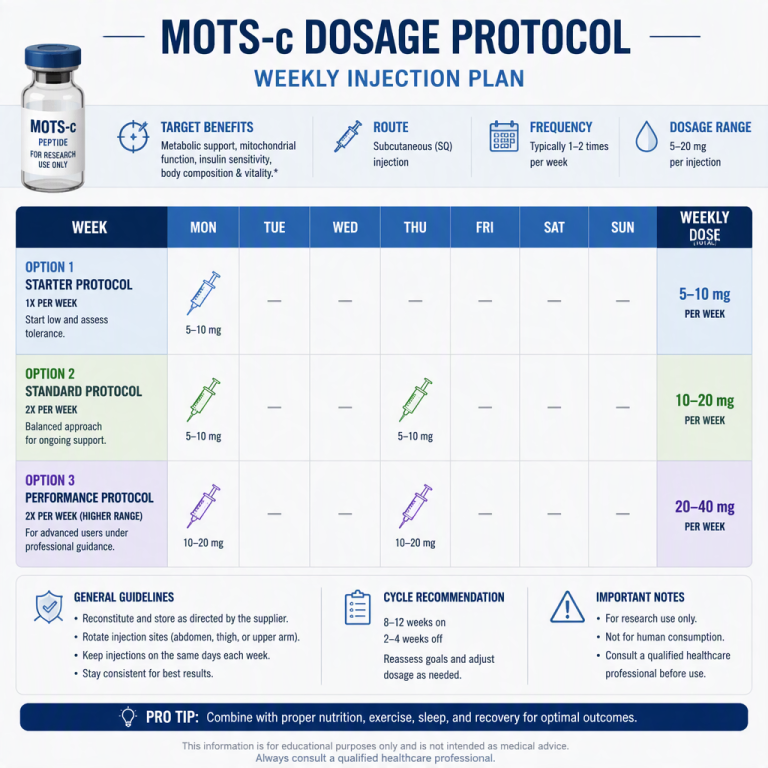
MOTS-c
- Requires injection (subcutaneous)
- Short half-life (needs regular dosing)
- More expensive per dose
- Growing clinical evidence
NAD+
- Oral administration (easy)
- Continuous support
- More affordable
- Extensive safety data
The Bottom Line
MOTS-c and NAD+ represent two different approaches to mitochondrial optimization. MOTS-c is a targeted signal that activates metabolic programs. NAD+ is essential fuel that powers cellular processes.
For most people, NAD+ precursors are the practical foundation. MOTS-c is a powerful addition for those seeking more targeted metabolic optimization. Together, they create a comprehensive mitochondrial support strategy.
Disclaimer: Consult a healthcare provider before starting any supplement or peptide protocol. This article is for informational purposes only.