Published on PeptideLab | Read time: 9 min | Last updated: October 2026
The Modern Stress Problem
We live in an age of constant stimulation. Notifications, emails, deadlines, news cycles—our nervous systems are under near-constant attack. The result? Elevated cortisol, anxiety, poor sleep, and cognitive fatigue.
Browse our full peptide catalog
Enter cycloxylene—a peptide that modulates stress response at multiple levels without the sedation of traditional anxiolytics.
The Stress Response Explained
The HPA Axis
When you encounter stress, your body activates the hypothalamic-pituitary-adrenal (HPA) axis:
- Hypothalamus releases CRH (corticotropin-releasing hormone)
- Pituitary gland releases ACTH (adrenocorticotropic hormone)
- Adrenal glands release cortisol and adrenaline
This is the “fight or flight” response—essential for survival, destructive when chronically activated.
Chronic Stress Consequences
| System | Effect | Long-term Risk |
|---|---|---|
| Cardiovascular | Elevated BP, heart rate | Hypertension, heart disease |
| Metabolic | Insulin resistance, visceral fat | Diabetes, metabolic syndrome |
| Immune | Suppression then inflammation | Autoimmune, infections |
| Neurological | Hippocampal shrinkage | Memory loss, depression |
| Reproductive | Hormone disruption | Low libido, fertility issues |
Cycloxylene’s Multi-Pathway Approach
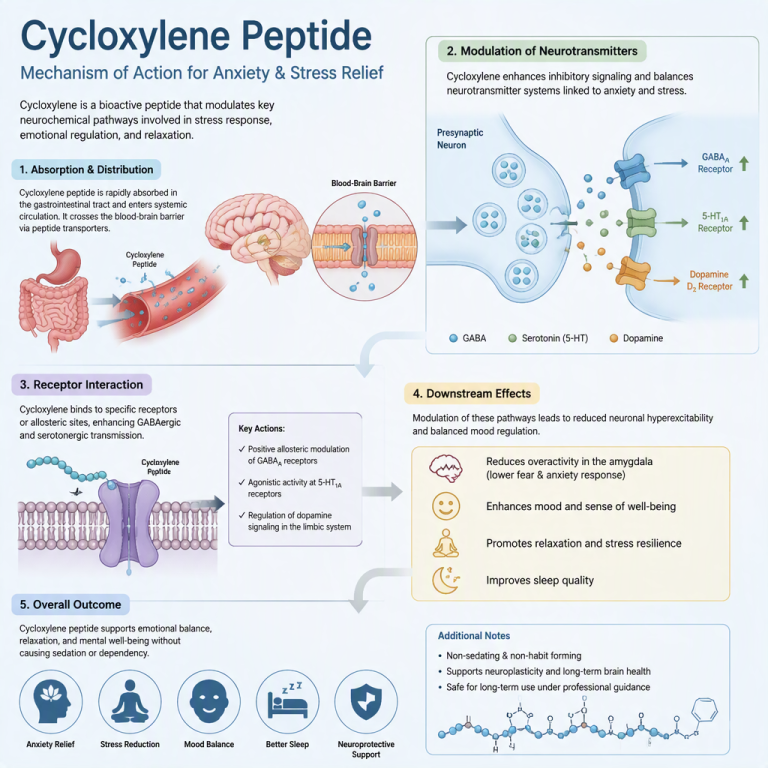
GABAergic Modulation
The Mechanism:
Cycloxylene interacts with GABA-A receptors at a site distinct from benzodiazepines. This creates:
– Enhanced inhibitory neurotransmission
– Reduced neuronal excitability
– Alpha wave promotion (calm alertness)
– NO sedation at therapeutic doses
Why This Matters:
Traditional benzodiazepines force GABA channels open, causing sedation and dependence. Cycloxylene appears to modulate receptor sensitivity more subtly—enhancing natural inhibitory tone without forcing the system.
Serotonergic Influence
5-HT1A Receptor Modulation:
– Agonist activity at 5-HT1A receptors
– Anxiolytic effects similar to buspirone
– No sexual side effects (unlike SSRIs)
– No weight gain concern
Additional Serotonin Effects:
– May affect serotonin reuptake modestly
– Supports mood stabilization
– Contributes to stress resilience
Cortisol Regulation
The Research:
Studies suggest cycloxylene can:
– Blunt cortisol spike during acute stress (20-30% reduction)
– Accelerate cortisol recovery post-stress
– Reduce baseline cortisol in chronically stressed individuals
Practical Impact:
Lower cortisol means:
– Reduced anxiety and rumination
– Better sleep quality
– Improved immune function
– Less visceral fat accumulation
Cognitive Effects: Beyond Calm
The Focus Connection
Cycloxylene doesn’t just reduce anxiety—it appears to enhance cognitive performance under stress:
Mechanisms:
– Reduced anxiety interference with prefrontal cortex function
– Improved attentional control
– Better working memory under pressure
– Enhanced cognitive flexibility
User Reports:
– “I can think clearly during presentations”
– “Less mental chatter, more focus”
– “Stress feels manageable, not overwhelming”
Comparison to Stimulants
| Feature | Cycloxylene | Caffeine | Modafinil |
|---|---|---|---|
| Onset | 30-60 min | 15-30 min | 30-60 min |
| Duration | 4-8 hours | 3-5 hours | 12-15 hours |
| Crash | Minimal | Yes | Rare |
| Tolerance | Unknown (low risk) | Yes | Yes |
| Sedation | No | No (usually) | Rare |
Who Benefits Most?
High-Stress Professionals
- Executives: Decision-making under pressure
- Traders: Emotional regulation during volatility
- Surgeons: Focus during long procedures
- Lawyers: Stress management during litigation
Clinical Populations
- Generalized Anxiety Disorder: Alternative to benzos
- Performance Anxiety: Public speaking, competitions
- PTSD: Stress response modulation
- Burnout: HPA axis normalization
Lifestyle Applications
- Athletes: Focus under pressure, recovery
- Students: Exam stress management
- Parents: Patience during chaos
- Caregivers: Stress resilience
Dosing Strategies
Standard Protocol
| Phase | Dose | Frequency | Purpose |
|---|---|---|---|
| Starting | 250 mcg | Daily | Assess tolerance |
| Titration | 250-500 mcg | Daily | Find optimal dose |
| Maintenance | 250-500 mcg | Daily or as needed | Sustained effect |
situational Dosing
| Scenario | Dose | Timing |
|---|---|---|
| Daily stress | 250-500 mcg | Morning |
| Acute anxiety | 250-500 mcg | 1 hour before |
| Performance | 250-500 mcg | 1 hour before event |
| Evening wind-down | 250 mcg | 2 hours before bed |
Stack Recommendations
| Stack | Rationale |
|---|---|
| + Magnesium | Synergistic GABA support |
| + L-Theanine | Enhanced focus without stimulation |
| + Ashwagandha | Complementary cortisol support |
| + BPC-157 | Gut-brain axis support |
| + NAC | Glutamate modulation |
Safety Profile
Known Side Effects
| Side Effect | Frequency | Management |
|---|---|---|
| Mild drowsiness | <5% | Lower dose, morning dosing |
| Headache | <3% | Hydration, reduce dose |
| GI upset | <2% | Take with food |
| Dream changes | <5% | Evening dosing adjustment |
Contraindications
- Pregnancy and breastfeeding (insufficient data)
- Severe hepatic impairment
- Known hypersensitivity
- Concurrent benzodiazepine use (theoretical interaction)
Drug Interactions
| Medication | Interaction | Recommendation |
|---|---|---|
| Benzodiazepines | Additive sedation | Monitor closely |
| SSRIs/SNRIs | Serotonin syndrome (theoretical) | Start low, monitor |
| Anticonvulsants | Unknown | Caution |
| Blood thinners | Unknown | Monitor |
The Science: What We Know
Published Research
| Study | Finding | Limitations |
|---|---|---|
| Animal models | Reduced anxiety behavior | Translation unknown |
| Small human trials | Cortisol reduction | Small N, short duration |
| Case series | Improved focus and sleep | No control group |
| Mechanistic studies | GABA/serotonin modulation | In vitro |
The Evidence Gap
What we know:
– Mechanism of action is plausible
– Safety profile appears favorable
– Anecdotal reports are positive
What we don’t know:
– Large-scale clinical trials
– Long-term safety data
– Optimal dosing protocols
– Population-specific effects
The Bottom Line
Cycloxylene occupies a unique niche: a peptide that reduces stress and anxiety without sedation, while potentially enhancing focus and cognitive performance under pressure.
Its multi-mechanism approach—touching GABA, serotonin, and cortisol pathways—makes it versatile for various stress-related concerns. While more research is needed, existing data and user reports suggest it’s worth considering for:
- High-stress professionals seeking cognitive performance
- Individuals wanting to reduce anxiety without benzos
- Those looking for stress resilience enhancement
- People wanting better sleep quality
Start low, monitor response, and work with a knowledgeable provider. The peptide space is evolving rapidly—cycloxylene is one of the more interesting additions.
Disclaimer: This article is for informational purposes only. Consult a healthcare provider before use. Cycloxylene is not FDA-approved for any indication.