Published on PeptideLab | Read time: 9 min | Last updated: October 2026
The Intracellular Mystery
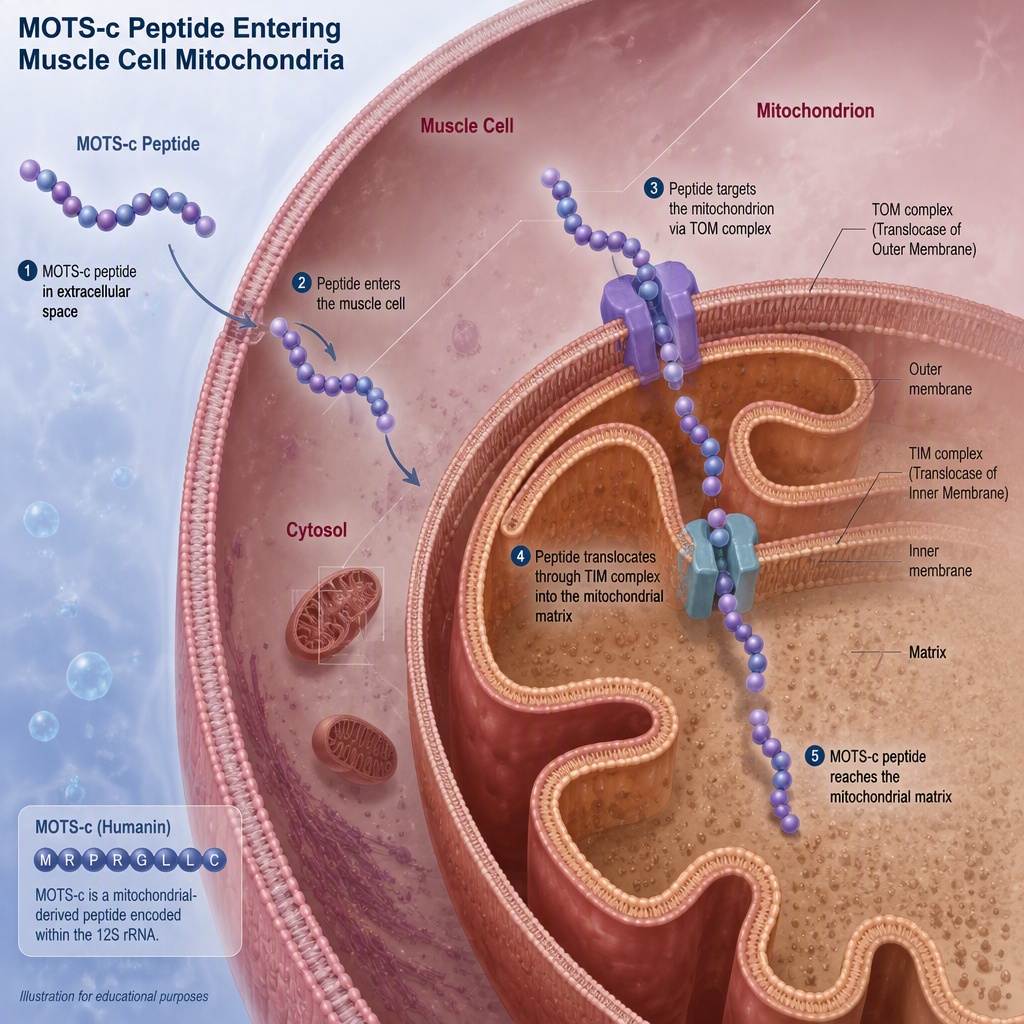
MOTS-c is unique among peptides because it can enter cells directly—not just bind surface receptors and send signals outward. It crosses the cell membrane and works inside the cell.
Browse our full peptide catalog
The Journey: From Injection to Action
Step 1: Administration
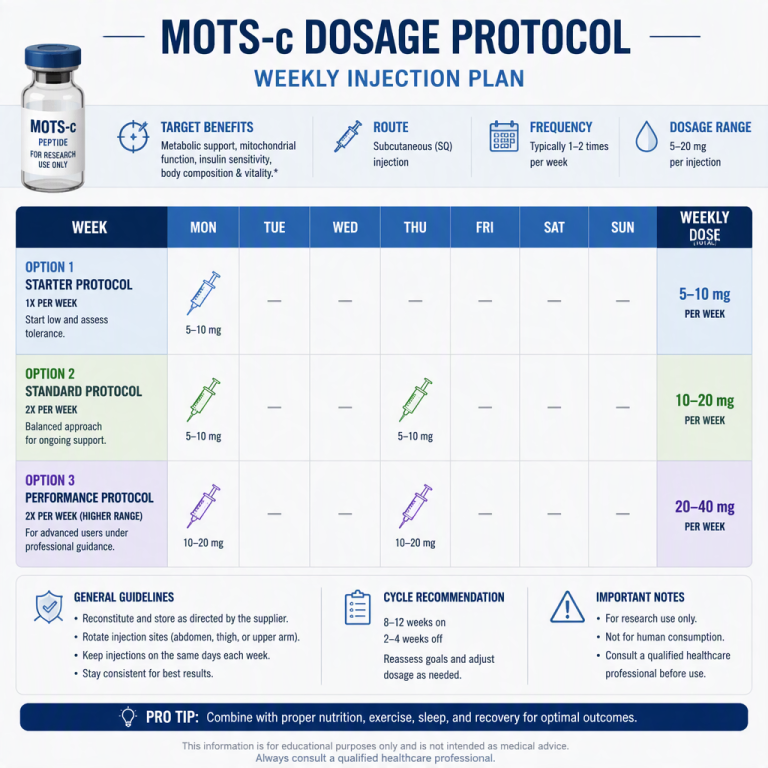
MOTS-c is typically administered subcutaneously. It enters circulation and crosses cell membranes.
Step 2: Cellular Entry
Unlike many peptides that only bind surface receptors, MOTS-c:
– Crosses the plasma membrane
– Enters the cytoplasm
– Translocates to the nucleus
– Interacts with DNA
Step 3: Nuclear Action
Inside the nucleus, MOTS-c:
– Binds to DNA
– Regulates gene expression
– Affects mitochondrial biogenesis genes
– Modulates metabolic genes
Step 4: Mitochondrial Effects
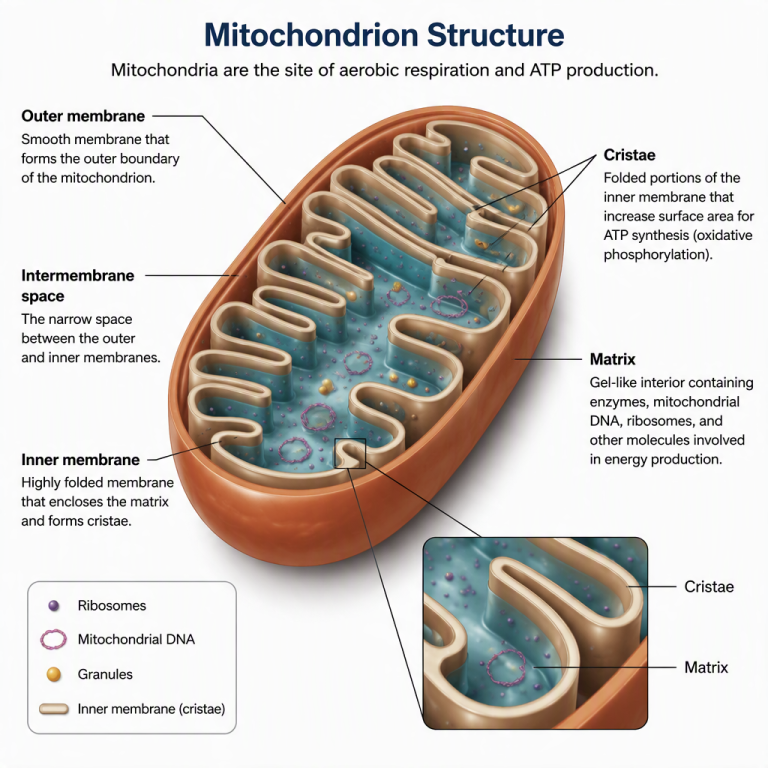
MOTS-c also accumulates in mitochondria, where it:
– Enhances oxidative phosphorylation
– Improves ATP production
– Reduces ROS production
– Supports mitochondrial dynamics
The AMPK Connection
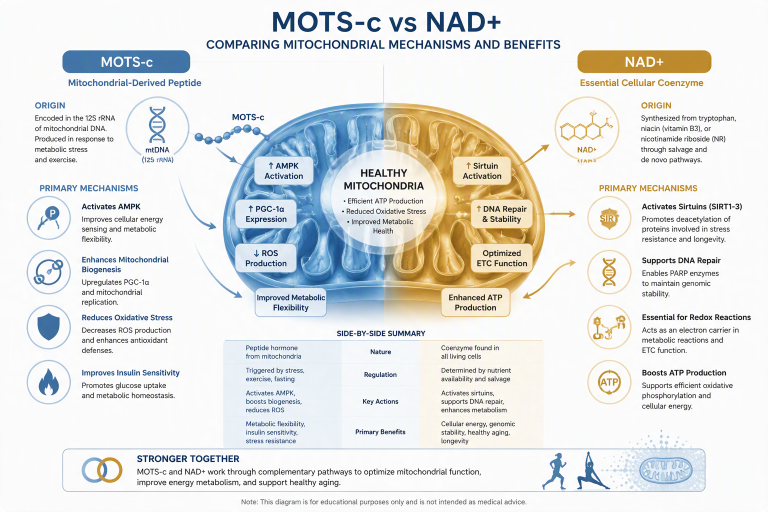
The primary mechanism is AMPK activation:
| When AMP rises… | AMPK activates… | Effects… |
|---|---|---|
| Low energy state | Glucose uptake ↑ | Muscles take up glucose |
| Fatty acid oxidation ↑ | Fat burning increases | |
| Mitochondrial biogenesis ↑ | More mitochondria | |
| Protein synthesis ↓ | Energy conservation |
Why This Matters
MOTS-c’s ability to work inside cells—both nucleus and mitochondria—gives it a unique advantage over many other peptides. It’s not just signaling; it’s reprogramming cellular metabolism at the genetic level.
Practical Implications
| Finding | Implication |
|---|---|
| Intracellular action | More comprehensive effects |
| Gene expression changes | Long-lasting benefits |
| Mitochondrial targeting | Direct energy optimization |
| AMPK activation | Exercise-mimicking effects |
The Bottom Line
MOTS-c is remarkable because it works at multiple intracellular levels—from the nucleus to the mitochondria. This multi-target approach explains its broad metabolic benefits.
Disclaimer: Informational purposes only. Consult a healthcare provider.